Claims
FNOL severity
First-notice photographs and text contradict the adjuster’s opening reserve, and the gap is found at FNOL rather than at closure.



Insure AI
Insure AI is 163 agents written for a general and life insurer. They work with policy administration, claims and payments systems, respect conduct and complaint-handling timelines, and ask the right owner before money moves.
Built for
Built for a general and life insurer selling motor, home, travel, health, life and commercial lines through agents, brokers, bancassurance and direct digital channels. They serve policyholders, claimants, agents and brokers, and sell personal and commercial insurance policies, renewals, claims service and add-on covers.
Free-look periods, pro-rata refunds and paid claims all change what a policyholder is owed.
Loss adjusters, repair networks and outsourcers need tenders, quotes and data-protection checks.
Complaint-handling and claims timelines are set by the regulator, and every reply must be fair and traceable.
Sharing data with a new processor is a decision for a person, not a default.
The industry the agents know
Regulation
The agents keep to the rules your business already answers to. Each one becomes an approval step, a setting or a record your team can check.
This is not legal advice. Your compliance team decides how each rule applies to you, and sets the rules and limits the agents follow.
Claims and complaint deadlines are tracked from first contact, and every reply is drafted for a person to approve.
Solvency and reserving figures come from your actuarial systems, never from an estimate. Anything that needs the Appointed Actuary goes to them.
Figures that feed IFRS 17 reporting are taken from the reserving warehouse with their source cited, and finance signs off.
Policyholders and claim payees are checked before money moves. A possible match goes to compliance, and the customer is not told.
Health and personal data are read in your systems under your access rules. Sharing data with a new processor is a decision for a person.
Your systems
Agents name no vendor. They connect to whichever system of each kind you already run, and read your data there.
Departments
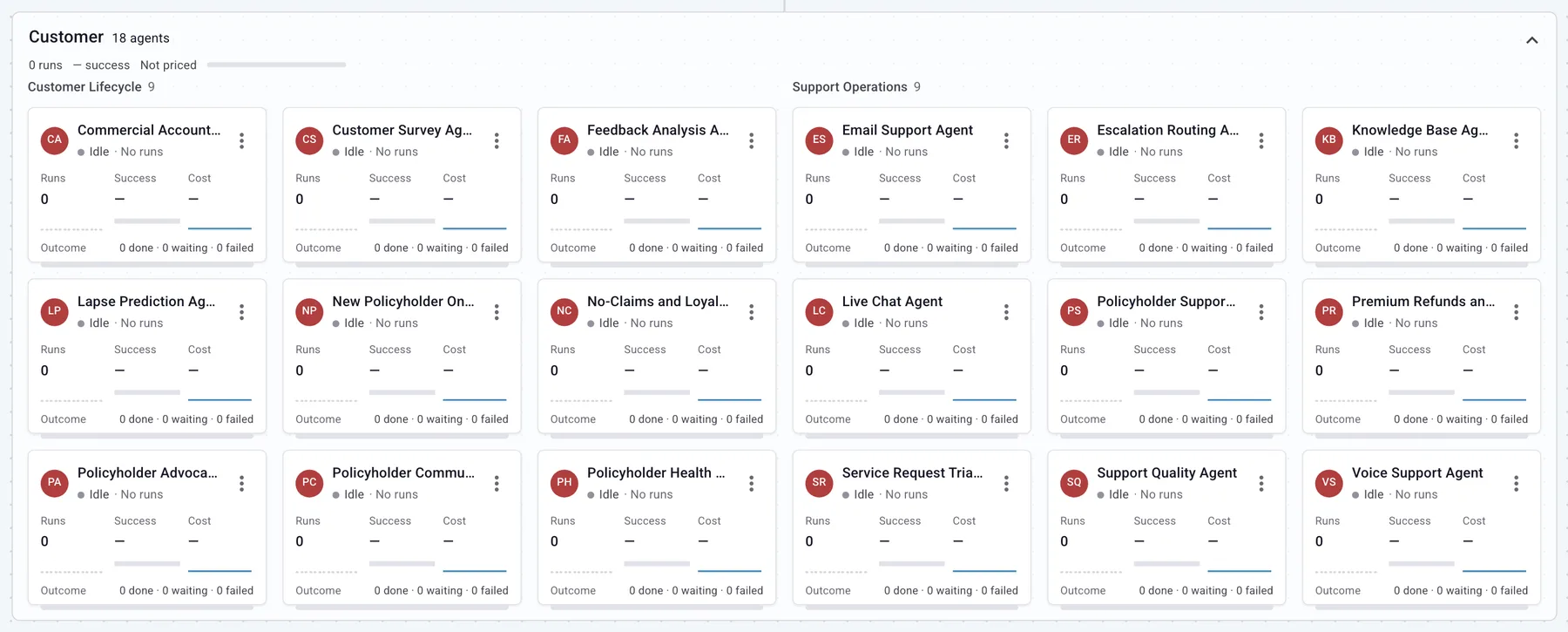
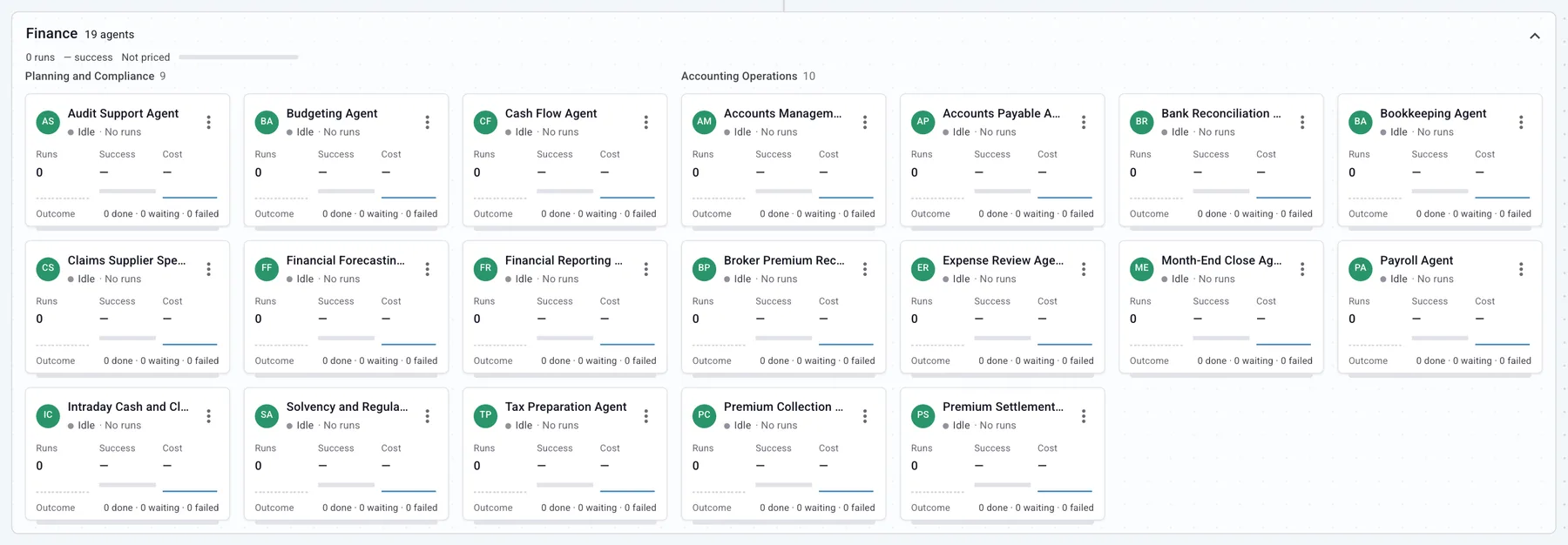
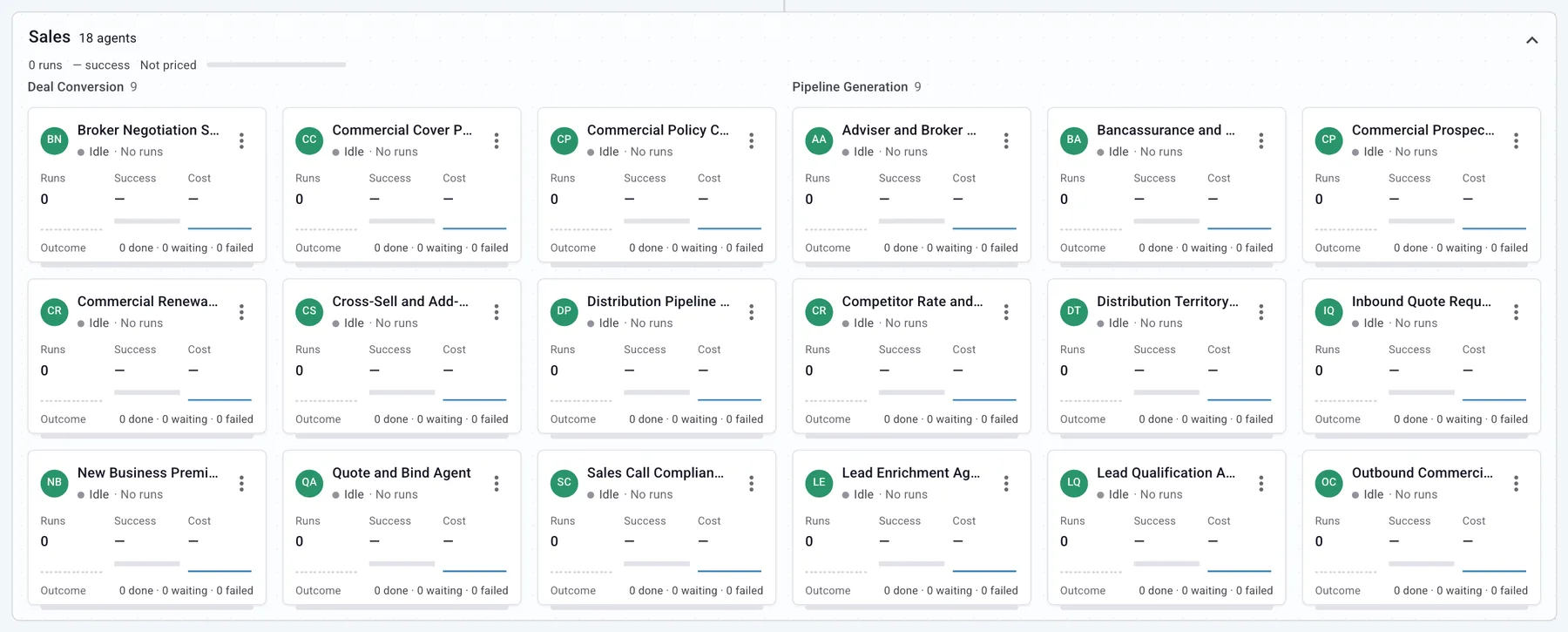
163 agents across 11 departments, each handing its work to the right Insure AI approver.
| Department | What it covers | Agents | Link |
|---|---|---|---|
| Content | video, writing, imagery and localisation | 12 | See agents → |
| Customer | support, service and retention | 18 | See agents → |
| Design | product, brand and experience design | 10 | See agents → |
| Engineering | building, running and securing the technology | 20 | See agents → |
| Finance | bookkeeping, payables, receivables, payroll, close and planning | 19 | See agents → |
| HR | hiring, onboarding, people operations and learning | 14 | See agents → |
| Management | events, programmes, operations and leadership support | 12 | See agents → |
| Marketing | advertising, campaigns, SEO, social and lifecycle marketing | 18 | See agents → |
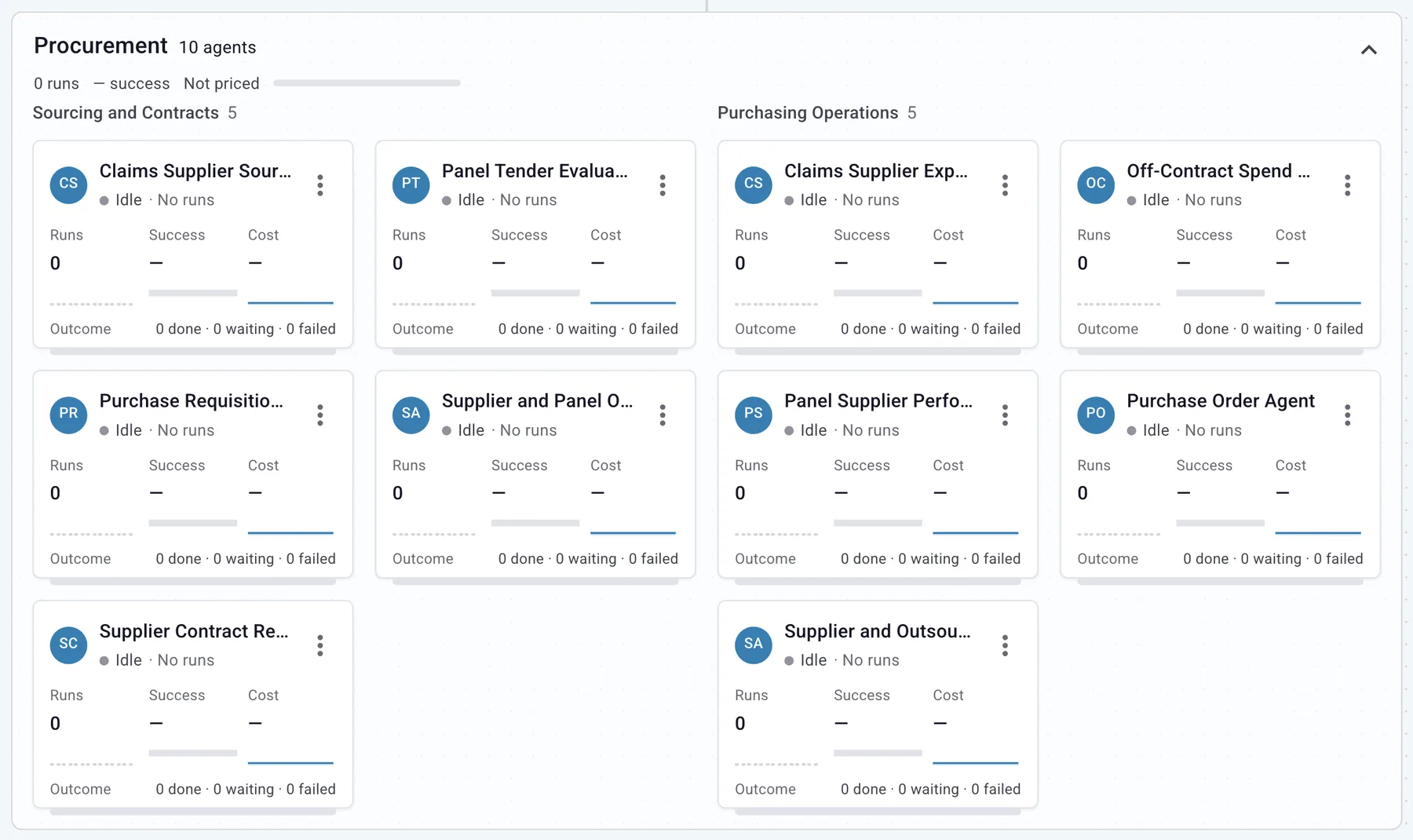
| Procurement | requisitions, sourcing, suppliers and contracts | 10 | See agents → |
| Product | planning, research, analytics and launches | 12 | See agents → |
| Sales | pipeline, deals, proposals and account growth | 18 | See agents → |
AI agents
From a real run
This is what the approver sees: the agent’s finished work, waiting for a decision.
Two storm-surge requisitions from CC-7310 are being returned rather than routed: REQ-2025-0412 for 46000 GBP (Northfield loss adjusting, one quote, outsourcing claims handling and policyholder data) and REQ-2025-0419 for 18500 GBP (Keystone body-shop, no quotes). Both fail the three-quote rule unless the suppliers are on approved panels, which is not confirmed, and the combined 64500 exceeds the stated 52000 headroom, which would bring in the CFO. Missing items are the quotes, panel status, whether health data is shared, the contract exit terms and confirmation of the 200000 budget. Once the requester supplies these, the Head of Procurement, CFO and Compliance Officer will review REQ-2025-0412 before any routing.
The approver can approve or edit and approve. Nothing is sent or changed until they do.
Inside the platform
Use cases
Free-look, mid-term and overpayment refunds worked out against the policy, payments and claims, then signed off.
Loss adjuster panels, body-shop fees and outsourcing changes checked against budget, quote rules and data-protection risk.
Repair networks, loss adjuster panels and claims administrators scored on price, service quality and turnaround.
How the work flows
Policy administration
Claims management
Payments platform
Document and correspondence
DECISIONS WE MODEL
Beside the agents, purpose-built models for the decisions an insurer makes hundreds of times a day. Each is a catalogue entry with a trained reference implementation, calibrated on your book, with reason codes on every score.
How we scope an outcome →First-notice photographs and text contradict the adjuster’s opening reserve, and the gap is found at FNOL rather than at closure.
Claims that share a repair shop, a clinic and a phone number across postcodes: invisible one file at a time, obvious as a graph.
Third-party liability sits in the loss report in plain language. A model reads the report as data, so it gets pursued.
Bound risk quietly exceeding the appetite the cat model was calibrated against, one acceptable exception at a time.
Billed codes exceeding the fee schedule across hundreds of lines, at a volume no human review will reach.
A storm track crosses thousands of in-force policies. The model says which ones to contact first, today.
CONNECTED AND GOVERNED
Read in place, never copied: Policy administration · Claims & FNOL · Adjuster documents · Telematics & IoT · Bureau & rating data · Finance & general ledger · Reinsurance treaties.
Tell us which policy, distribution or back-office work you want to improve. We’ll reply within one working day.