Spend
Spend anomalies
Unusual spend patterns by supplier, category and cost centre, ranked by the money at stake.



Procure AI
Procure AI is 163 agents written for a procurement and source-to-pay services business. They know delegation-of-authority limits, three-quote rules and maverick spend, and they stop for the right approver before anything is committed.
Built for
Built for a procurement and source-to-pay services company that runs sourcing, contracting, supplier management and accounts payable for its own operations and for client organisations. They serve client organisations' procurement and finance teams, and their requisitioners, and sell managed sourcing events, category management, contract lifecycle, supplier onboarding and risk, purchase-to-pay and spend analytics.
Requisitions wait in approval while requisitioners chase the service desk for a status nobody can see.
Spend slips around delegation limits and outside contracts, and the reason is rarely recorded.
Weightings, should-cost checks and compliance gaps are worked through by hand for every event.
Sanctions, anti-bribery and ESG due diligence must hold for every supplier, every time.
The industry the agents know
Regulation
The agents keep to the rules your business already answers to. Each one becomes an approval step, a setting or a record your team can check.
This is not legal advice. Your compliance team decides how each rule applies to you, and sets the rules and limits the agents follow.
Limits are settings, and requisitioning, approving and paying stay with different people. A split purchase is flagged, not passed.
Tender steps, quote counts and award approvals are written into the agents’ rules, and every award goes to a named approver.
Suppliers are screened for ownership, conflicts of interest and bribery risk before onboarding. Anything incomplete stops onboarding.
A possible match stops the supplier or payment, and the Supplier Risk Lead decides.
Invoices are checked for the supplier’s tax registration and VAT before the three-way match, and Accounts Payable always signs off.
Supplier and client data is read in your systems, under the access rules you set.
Your systems
Agents name no vendor. They connect to whichever system of each kind you already run, and read your data there.
Departments
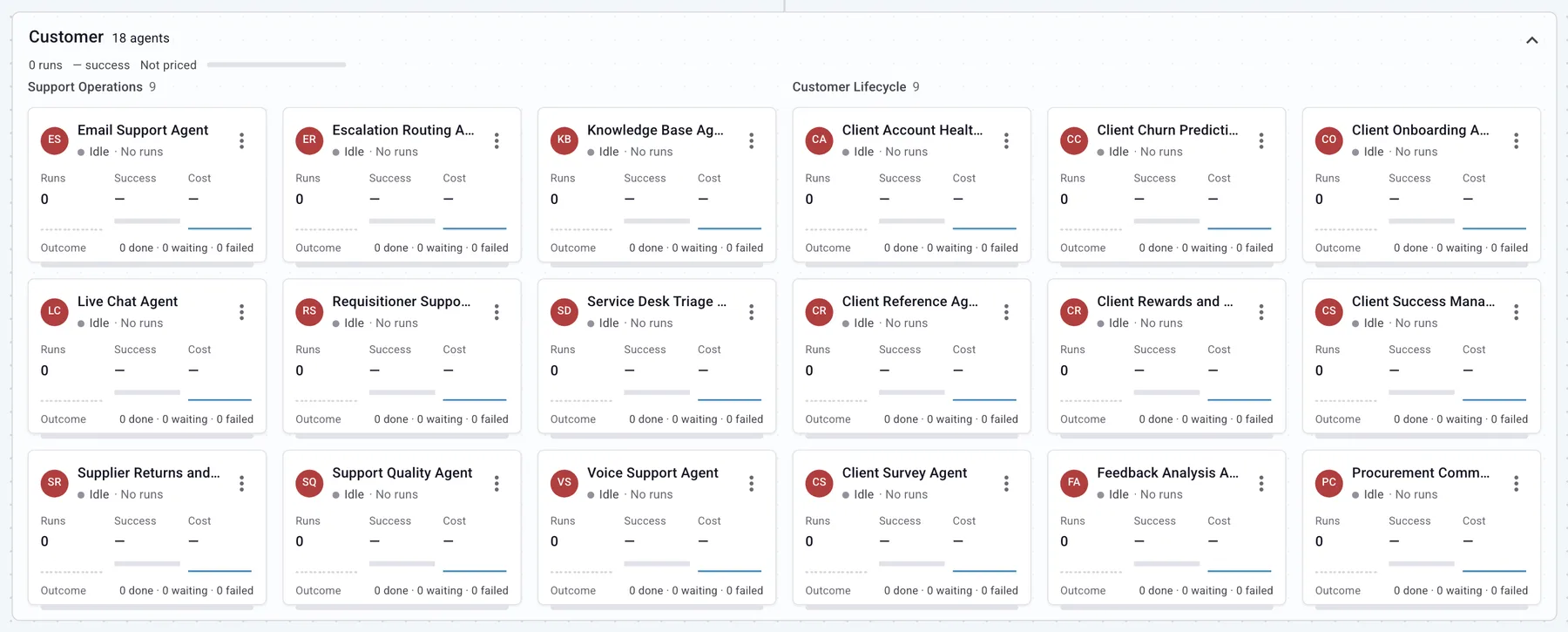
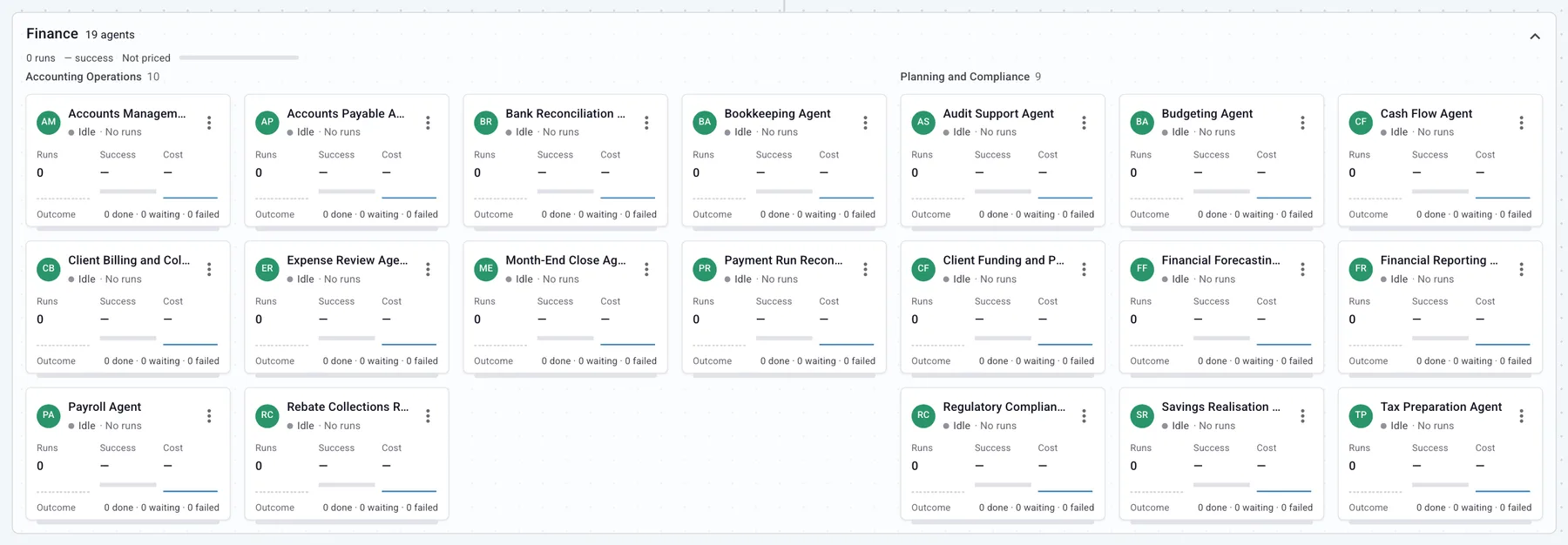
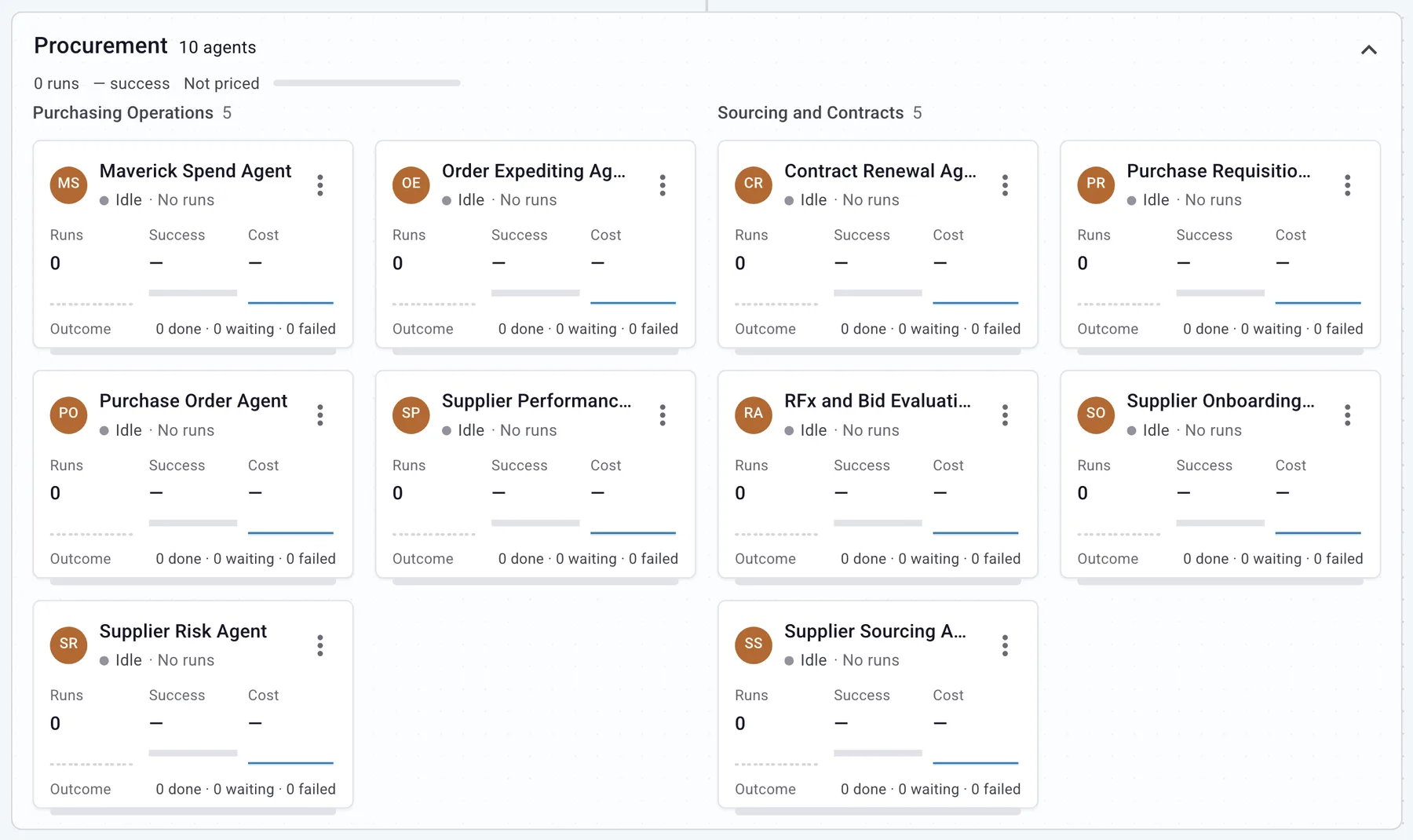
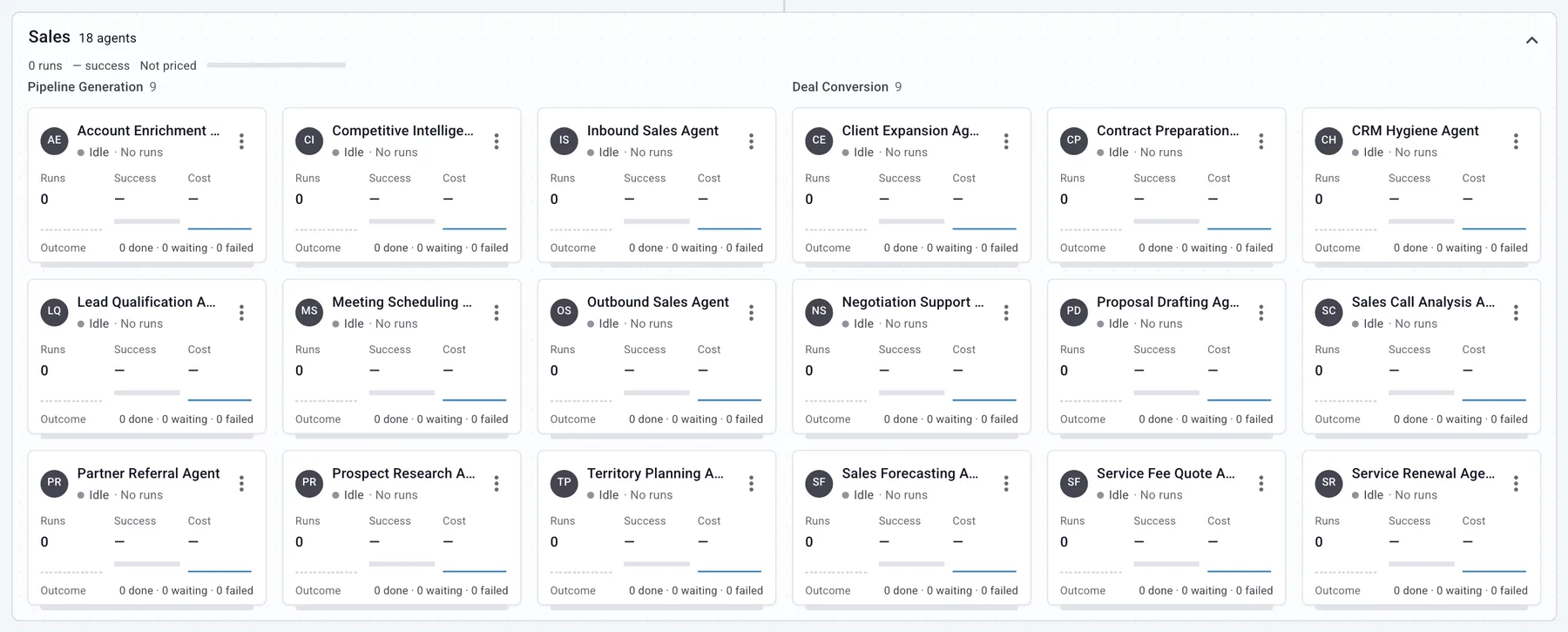
163 agents across 11 departments, each handing its work to the right Procure AI approver.
| Department | What it covers | Agents | Link |
|---|---|---|---|
| Content | video, writing, imagery and localisation | 12 | See agents → |
| Customer | support, service and retention | 18 | See agents → |
| Design | product, brand and experience design | 10 | See agents → |
| Engineering | building, running and securing the technology | 20 | See agents → |
| Finance | bookkeeping, payables, receivables, payroll, close and planning | 19 | See agents → |
| HR | hiring, onboarding, people operations and learning | 14 | See agents → |
| Management | events, programmes, operations and leadership support | 12 | See agents → |
| Marketing | advertising, campaigns, SEO, social and lifecycle marketing | 18 | See agents → |
| Procurement | requisitions, sourcing, suppliers and contracts | 10 | See agents → |
| Product | planning, research, analytics and launches | 12 | See agents → |
| Sales | pipeline, deals, proposals and account growth | 18 | See agents → |
AI agents
From a real run
This is what the approver sees: the agent’s finished work, waiting for a decision.
This is a requisitioner query about REQ-2024-0417, a 48,500 EUR laboratory equipment requisition stuck in approval for six days with no PO and an unknown quote expiry. All names, the requisition number and the amount are illustrative and unverified, and no source-to-pay records or relevant knowledge-base sections were returned. The reply withholds document details until the user's client account is confirmed and asks for the verified requisition number, quote reference and expiry date. The possible delegation-limit exception and any approval-turnaround breach need your sign-off because they touch an approval-limit matter, though no credit is offered. Once approved, a ticket is opened and routed to Source-to-Pay Support to confirm the approver, approval step and limit, and a first substantive response goes out within 4 hours.
The approver can approve or edit and approve. Nothing is sent or changed until they do.
Inside the platform
Use cases
Why a requisition is stuck, where the PO is, why an invoice is on hold: answered from the client’s own records.
Every bid scored on the published weighting, checked for gaps and abnormally low prices, with a recommended winner and runner-up.
Invoices with no PO, card spend in managed categories and off-contract buys, with the reason each one happened.
How the work flows
Source-to-pay suite
ERP purchasing and payables
Contract lifecycle management
Supplier master and risk screening
DECISIONS WE MODEL
Beside the agents, purpose-built models that find leakage in specifications, tenders and invoices before it is paid.
How we scope an outcome →Unusual spend patterns by supplier, category and cost centre, ranked by the money at stake.
Financial, sanctions and delivery signals combined into one score with its reasons attached.
Purchase order, goods receipt and invoice reconciled at volume, with the mismatches explained.
Bids and specifications read into structured, comparable fields, so evaluation starts from evidence.
Every line classified to your taxonomy, so the category view is complete rather than sampled.
Invoice prices checked against the contract that should govern them, line by line.
CONNECTED AND GOVERNED
Read in place, never copied: Source-to-pay suite · ERP purchasing and payables · Contract lifecycle management · Supplier master and risk screening.
Tell us where your source-to-pay process slows down. We’ll reply within one working day.